Wednesday, July 11, 2012

What is Jazz Dance?


You’ve heard of it but you’re not sure what it is.  Many people have asked me, does it mean you dance to actual jazz music?  The answer? Not exactly.

Jazz dance originated in the 1800s by the African-American culture tap dancing to jazz music.

By the 1900s, jazz dance became a form of entertainment.  The Charleston and the Cake Walk were some of the primary moves. 

Then in the 1930s and through the 1960s, a more theatrical and technical part of dance came to jazz.  Jack Cole who some have called the Father of Jazz Dance, took his movements from modern and east Indian dance to create a style all his own.  Choreographers at this time were heavily influenced by him.  These included Jerome Robbins who’s most well known choreography was shown in West Side Story and Bob Fosse who’s most popular work was done on Broadway with shows like Chicago and Sweet Charity.  Also during this time, jazz dance had a very large influence from Latin American dance styles.  Katherine Dunham was in fact the choreographer who created the isolations that make up jazz dance today. 

Since the 70s, jazz dance has emerged into a style that incorporates ballet and even hip-hop.

So if you attend an adult jazz class, you’ll notice a warm-up that includes isolations, stretching and rhythm.  You’ll work on various techniques like turns and jumps as well as syncopated rhythms and foot patterns.  Then you’ll learn a combination of moves that could be in any of the styles of jazz dance: Broadway, Modern, Latin, Pop, etc.

Although jazz dance is always changing, its roots are in grasping the concepts of turns, leaps, isolations and rhythm.   If you’ve never done jazz before but always wanted to try, Beginner Adult class is the perfect place to start!  


Here's a brief movie clip about Jack Cole, The Father of Jazz Dance 
and the influence he had on the style of dance today.

Saturday, July 7, 2012

Am I too old to take a hip-hop dance class?


For the past 10 years I’ve been teaching dance to people of all ages and levels.  In the last couple years I’ve been working with a lot of adults ages 35 to 85.  When I tell them I teach hip-hop dance classes, they laugh and say, “Oh I’m too old for that.  I can’t move my hips that way.”

But I’m here to tell you ANYONE can do hip-hop, it just takes the right teacher and a little patience.  Hip-hop dance is about isolations of the body, rhythm and a little attitude.  In the first class I tell everyone to stand hip width apart with their knees slightly bent and their shoulders slightly forward.  Then we bounce and step touch side to side.  That’s it!  If you can do that with music then you’re dancing already!

Maybe your body can’t move as fast as it used to and maybe it takes a little longer to learn the steps, but movies like GOTTA DANCE show us anything’s possible.  This documentary follows the average person ranging in ages from 59-83 and their journey to becoming the NJ Nets Senior Dance Team.  

One thing that stands out is the smiles on their face.  Dance is the ultimate mind body connection no matter what your age.  It keeps your brain young and your body healthy. More importantly, you can’t help but smile when you do it.


Saturday, August 27, 2011

The Benefits of Self-Myofascial Release (SMR)

We all know that stretching is an important part of any exercise routine. Flexibility is important because it allows us to increase our range of motion for a movement while creating less injuries and decreasing sources of pain in the body. I have had many clients, especially those 50+ who complain of back pain, knee pain, shoulder pain, etc. Most of the time it's due to a lack of flexibility and an increase in tightness in their body.

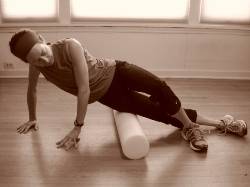
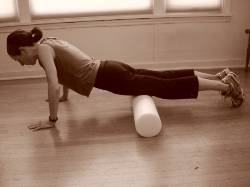
Although there are many types of flexibility training, one that I recommend to just about everyone is Self-Myofascial Release with a foam roller. SMR helps breakdown the fibrous tissues called fascia in the body. I like to think of fascia as the layer on top of the muscle that I need my clients to breakdown. If the fascia is tight or tender due to stress or trauma the body has endured then it puts pressure on the joints and it becomes harder to stretch the muscles lying underneath it. In order to loosen the fascia we need to give it some light to moderate pressure and allow it to release which makes the body to become more mobile. This therefore increases flexibility and range of motion all while decreasing pain.

SMR is simple and easy to do with a foam roller. You can purchase one at any sports store or buy it from Amazon for about $25. I usually recommend this size and density. The pictures below show the best uses for this piece of equipment. These exercises can be done before and/or after your workout as well as every day or every other day. You'll see your body getting lower in a squat. You'll feel less pain in your back and knees. The best part is you'll start to feel like you're moving with better ease. Although the body will feel tender at first and it may be a harder adjustment for those that are very tight, I promise it will make your body much more efficient in your daily activities. If you have any questions or want to learn more, please feel free to contact me on my facebook page at e Motion (The Dance and Fitness Studio for Adults).


Photos: http://sportsmedicine.about.com/od/flexibilityandstretching/ss/FoamRoller.htm


Monday, February 21, 2011

Personal Training - Why is it helpful?


You've heard about personal trainers. You may have worked with one or have seen the ones on Biggest Loser. How do you know if you need a trainer? Here's an easy check list to see if a trainer is right for you.

* You need accountability.
* You need motivation.
* You have an injury and are not sure how to get back into fitness.
* You've never worked out before.
* You need someone to watch your form and prevent you from getting hurt.
* You need someone to take your body and your training to the next level.
* You have medical issues.
* You're training for an event or competition.

Personal Training doesn't have to be 1 on 1 two times a week. It can be done with a partner or a small group. It can be once a week or once a month with workouts written for you. Whatever you need to get your body and fitness to the level you desire, a trainer is a great way to get started. Decide what you need and let me help you get closer to that goal.

Tuesday, January 18, 2011

Cut Calories and Burn More Calories in 2011


It's this time of year people start to head to the gym and go on a diet. Yet, within a few months, most people forget about their new year's resolution and go back to their old habits. Isn't it about time your health stops being a new year's resolution and starts being #1 on your priority list of life?

Don't always have time for the gym? Try some of these methods through out your day and see how your body starts to change. Small changes every day are the key to successful weight loss and a healthy body.

10 ways to cut calories from your day:

1. Drink water instead of soda.
2. Use a non stick olive oil cooking spray instead of butter.
3. Have non fat Greek yogurt with fresh berries instead of ice cream.
4. Have grilled chicken instead of breaded.
5. Eat only half of your dinner at a restaurant & take the other half home.
6. Substitute whole grain rice for white rice.
7. Skip the bread basket and add a salad to your restaurant meal.
8. Order thin crust pizza instead of deep dish.
9. Bring your own air popped popcorn to the movies.
10. Get 8 hours of sleep to prevent eating more when you're tired.

10 ways to burn more calories in a day:

1. Take the stairs instead of the elevator.
2. Park your car further away from the grocery store.
3. Start and end everyday with 1 minute of jumping jacks.
4. Take a walk with a loved one after dinner.
5. Practice squat form every time you get up & sit down in your chair at work.
6. Make it a habit to get up and walk around for a few minutes every hour.
7. Wear a pedometer and make sure you get your 10,000 steps per day.
8. Stand on 1 leg while you wash the dishes.
9. Babysit or play with your kids for an hour.
10. Perform lunges or sit-ups during commercials.

Being healthy and fit isn't just about the 1 hour you spend at the gym, it's about keeping a healthy and active lifestyle all the time. Put your health first and you'll feel better, look better, and gain a whole new level of confidence.

Tuesday, August 3, 2010

Flat Abs: Hard, but Not Impossible


It’s the most asked question in the gym.

How do I get flat abs?

Let’s start with the basics. The abdominals are made up of four muscle groups:


* Transverse Abdominus (deepest muscles, wraps around torso to support the back)
* Internal Obliques (second deepest muscles, rotation and flexion of the spine)
* External Obliques (sides of torso, can be seen/felt on surface, rotation/flexion)
* Rectus Abdominus (top layer, helps posture a bit, responsible for “6 pack”)

The abdominals are necessary for:
* Posture
* Core Movement
* Breathing

Based on that information, one of the best ways to get flatter abs is to correct your posture. With most of us having what I like to call an “American Posture” (rounded shoulders and a pushed out stomach) due to working while sitting at a desk focused on the computer, it’s no wonder we have back pain and poor abdominal strength.

Practice posture by sitting up tall in your chair. Think about a string from your pelvis to the top of your head pulling you towards the sky. Envision your hips straight on the chair, your belly button pulled into your back, your shoulders over your hips and your head on top of your spine. If you’re doing it correctly, you will feel a pull in your stomach. That is your abdominals working – lengthening and engaging. Taking that same posture when you walk will make you look taller and keep your stomach flatter.

The second component is creating core movement. This could mean your typical sit-up or crunch, but what about a motion that involves twisting such as yoga, canoeing, or boxing? Abdominal work doesn’t have to be sit-ups. The more the torso moves in various directions the more all the muscles are engaged. Anytime the body is in an unstable position, it uses the core abdominal muscles to balance. Try something new and give your abs a shock.

Another component is the idea of breathing. As your lungs take in air, your abs naturally push air out through the mouth and nose. The more you can emphasize that motion the harder your ab muscles will work. Next time you do a crunch, inhale on the ground and as you lift your body up, exhale and think about pushing the belly button to the floor and making the abs flat. This will make your crunch much more effective.

Besides these three components, there are a few other things that contribute to flat abs including: increasing cardio exercise to burn fat, lifting weights to increase the speed of your metabolism, eating a healthy diet, and of course always adding variety to your workout to avoid a plateau.

Flat abs are hard to obtain, but it’s not impossible. Start by following one of these suggestions and see your midsection begin to change. Follow all of these and you’ll be ready to strut your stuff at the beach.

Monday, July 26, 2010

Feeling Stuck? 10 Ways to Move Beyond Your Weight Loss Plateau


Envision an image of success in your mind

Visualize yourself fitting into your old high school jeans or looking great in a bathing suit on the beach. Keep that image with you and think about it every time you’re about to eat something greasy or decide not to work out. Remember to remind yourself of the long term reality, excess weight brings an unhealthy lifestyle, while a healthy eating plan and exercise are key components to a long happy life.


Know your weight loss personality.

Understand your tendencies and make a plan to avoid those situations that trigger unhealthy food options.


Impulsive

See a pint of ice cream and go for it

Oblivious

TV Snacker

Uptight

Eat to feel better

Tenacious

Highly Self Directed; easy time with food

Sociable

Tend to monitor food intake better than others


Record every food morsel you eat, taste, and lick

Underestimating the amount of food you’ve eaten can lead to a plateau or weight gain. Keep a food diary. Include the time of day you eat, the type of food, the calories, and how you feel when you ate a particular food. Keeping track of your food intake holds you accountable and brings success.


Beware of portion sizes

As portions tend to get bigger, we start to eat more than our plan prescribes. If you haven’t before, begin weighing and measuring all of your food to understand what a ½ cup or 1oz actually is. Try cutting your daily caloric intake by 100-200:

  • Have fruit instead of cookies or chips
  • Order appetizers with vegetables instead of meat
  • Drink diet soda instead of regular


Watch restaurant overeating

Restaurants are packed with huge portions and food covered in butters and creams. Practice good portion control by ordering an appetizer or salad instead of an entrée. Another great tip is to ask for the to-go box with your meal and put half of it away.


Eat low-fat protein to stay full

Proteins work by suppressing a stomach hormone (ghrelin) that stimulates hunger while fatty foods actually tend to increase hunger.


Eat more fruits and vegetables

The US government’s dietary guidelines suggest we get 7-13 cups of produce daily. Eating these more often will provide you with more vitamins, antioxidants, and fiber. At the same time, it fills you up on low-calorie, nutrient dense foods so you feel full longer.


Change up your exercise routine

Doing the same thing in the gym everyday allows your body to get used to a routine and become efficient at doing it which in contrast creates a plateau. To keep your muscles guessing, vary your physical activity often. For example, if you always do 30 minutes on the treadmill at the same speed, try a few intervals at higher speeds or elevations. Also make sure to include weight training into your routine to increase muscle mass and reduce fat.


Wear a pedometer

A pedometer tracks the amount of steps you take during your day. You should aim for 10,000 steps per day for health and weight loss. If you’re having trouble meeting that number, try taking the stairs as often as you can to help.


Try Yoga to Avoid Stress Eating

Studies show that yoga lowers levels of stress hormones. Try child’s pose (http://www.wildmind.org/applied/yoga/asanas/child) next time you feel stressed to avoid overeating.


References:

www.webmd.com“10 Ways to Move Beyond a Weight Loss Plateau”

Photos taken from www.flickr.com